
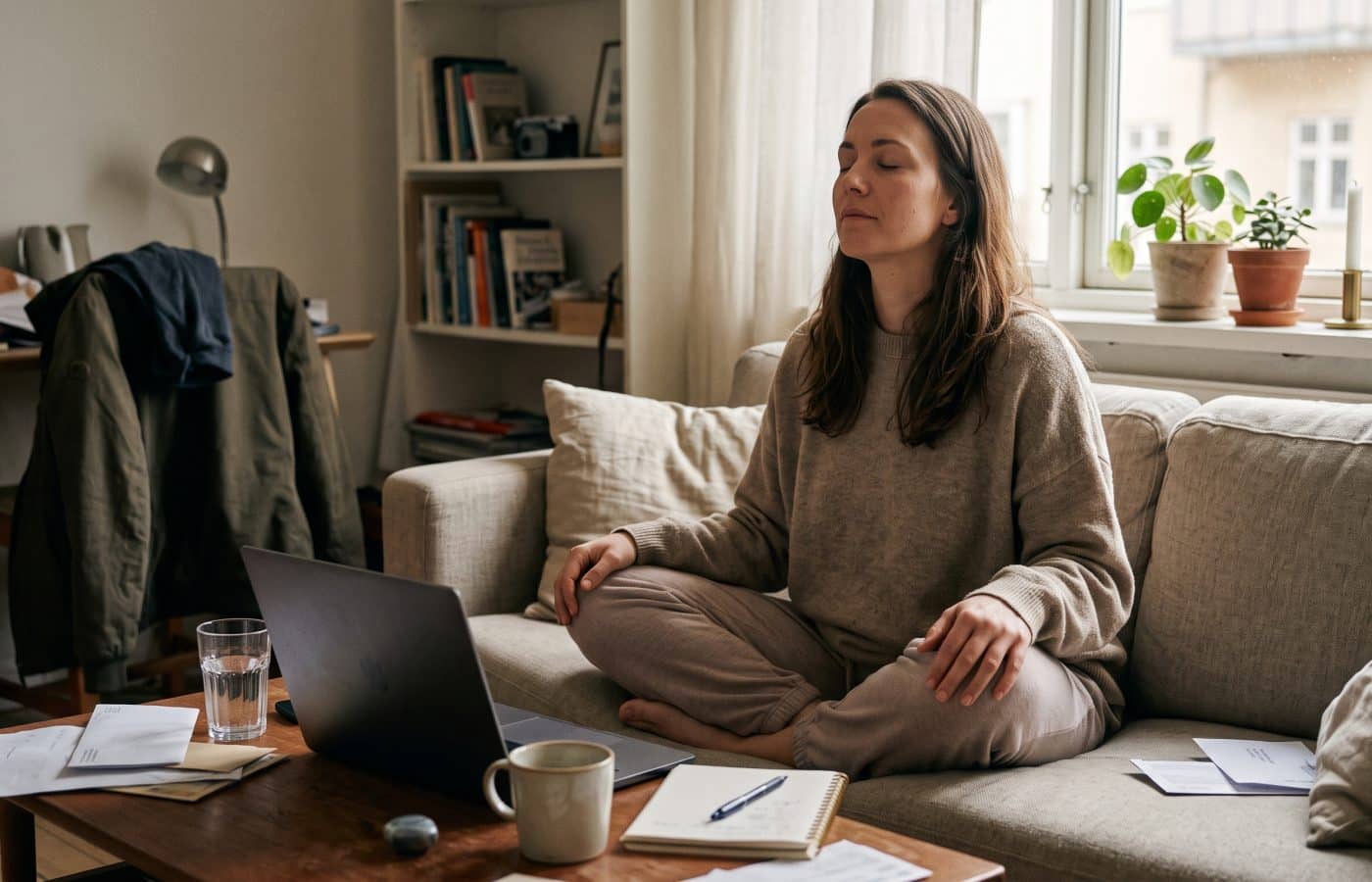
How to Reduce Stress When Life Feels Nonstop

A client once sat down on my couch, set her phone face down on the cushion beside her, and said, “I don’t need a vacation. I need a pause button.” Then she laughed, because she knew there wasn’t one. She had two kids, a manager who sent messages at 10 p.m., an aging father three hours away, and a body that had started waking her at 3:40 every morning like an alarm she never set. Her question wasn’t really about how to reduce stress. What she wanted to know was how to survive her own calendar.
I have heard some version of that sentence hundreds of times in my years as a Licensed Mental Health Counselor. The details change. The feeling doesn’t. Life doesn’t slow down just because you are tired, and most advice about how to reduce stress seems written for someone with a quiet weekend and a spa membership.
This article is for the rest of us. I want to walk you through how to reduce stress the way I actually teach it to clients who feel like they are running on a treadmill someone else keeps speeding up. Some of it is grounded in research. Some of it comes from sitting across from real people and watching what helps and what quietly gets abandoned by Thursday. (The client stories here are composites, with identifying details changed.)
What Stress Is Actually Doing to You
Let’s start with the plumbing, because understanding it takes away some of the shame.
Your brain has a built in alarm. When it senses a threat, it floods your body with hormones that push your heart rate and blood pressure up so you can act. Mayo Clinic describes this fight or flight response plainly and makes a point I repeat to clients all the time: the system is supposed to switch off once the threat passes, but the constant demands of modern life mean that for many people, it rarely does.
That is the core problem with a nonstop life. It isn’t one huge crisis. It is the alarm never fully resetting. The email, the school pickup, the bill, the news alert, the group chat. Each one is small. Together they keep your nervous system idling in the red.
The National Institute of Mental Health draws a helpful line between stress and anxiety. Stress is usually a response to something outside you, like a deadline or an argument, and it tends to ease once that situation is resolved. Anxiety is the body continuing to react even when there is no current threat. According to the NIMH fact sheet on stress, when that reaction doesn’t let up, it can start to affect sleep, digestion, immunity, and heart health, and it can raise the risk of anxiety disorders and depression.
So when you feel wired and exhausted at the same time, you are not broken. You are a well designed system being used in a way it was never meant to be used. That is actually good news, because it means learning how to reduce stress is mostly about giving that system what it needs to stand down.
Why “Just Relax” Doesn’t Reduce Stress
Here is something I wish more wellness content admitted. Telling a stressed person to relax is like telling a smoke detector to calm down while the toast is still burning.
Most people I see already know the standard list for how to reduce stress. Sleep more. Exercise. Meditate. Drink water. They aren’t struggling because they lack information. They are struggling because the advice assumes a level of time, energy, and control they don’t have right now. And when the tips don’t stick, they add a fresh item to the pile: guilt about not managing stress well enough.
So my approach is different. I look for the smallest change that interrupts the alarm, then build from there. Not a new lifestyle. A foothold.
Reduce Stress Through the Body First, Because the Mind Follows
When someone asks me how to reduce stress in the middle of an overwhelming week, I don’t begin with their thoughts. Thoughts are hard to argue with when your heart is pounding. I begin with the breath, because it is one of the few parts of the stress response you can steer on purpose.
The technique I teach most often is called cyclic sighing. You take a full breath in through your nose, then a second, shorter sip of air on top of it to fill your lungs completely, and then let it all out slowly through your mouth. The exhale should be longer than the two inhales combined. Repeat for a few minutes.
The Research Behind Cyclic Sighing
This isn’t folk wisdom. A randomized controlled trial published in Cell Reports Medicine compared five minutes a day of different breathing exercises with five minutes of mindfulness meditation over one month. The exhale focused cyclic sighing produced greater improvement in mood and a larger drop in breathing rate than meditation did, and the researchers concluded it shows real promise as a daily stress management tool.
I like it for a practical reason too. It fits anywhere. You can do it in a parked car, a bathroom stall, or the thirty seconds before a meeting starts. One father I worked with did it every time he pulled into his driveway, before walking into a house full of noise. He called it “decompressing the diver.” Within two weeks, his wife noticed he was snapping less in the first hour home. Nothing else in his life had changed.
If breathing exercises feel silly to you, that’s fine. Try it anyway, once, right now, and notice what happens in your shoulders.
Reduce Stress by Sorting It Into Three Piles
Once the body has settled a little, we can think more clearly. This is where I bring out what I call the three piles, one of my favorite tools for how to reduce stress when everything feels urgent.
Grab a piece of paper and dump out everything that is weighing on you. Don’t organize it. Just get it out of your head. Then sort each item into one of three piles.
Things I control. What I say, what I agree to, when I go to bed, whether I answer that message tonight.
Things I can influence. My teenager’s choices, my team’s deadline, my partner’s mood. I can affect these, but I don’t get the final say.
Things I can’t touch. The economy, the weather, someone else’s past, the news cycle.
Most people discover that a surprising amount of their mental energy lives in the third pile. They are spending real fuel on things they cannot move. The goal isn’t to stop caring about those things. It is to notice when you are rehearsing worries you can’t act on, and gently bring your attention back to the first pile.
Move More Worries Into the Pile You Control
Sometimes the exercise also reveals worries that belong in pile one but feel stuck in pile three. Money is a common example, and learning how to create a budget can turn a vague dread into a plan you control. The same goes for digital worries. Knowing how to spot phishing emails and how to create a strong password replaces background online anxiety with a few simple habits.
This exercise is quietly powerful. A nurse I saw last year realized that roughly half her late night worrying was about decisions hospital administration would make without her. She couldn’t stop the decisions. But she could stop reviewing them at 11 p.m. She started writing them in a “not tonight” note on her phone and closing it. That small ritual gave her back about forty minutes of sleep most nights.
Shrink the Day Down to the Next Right Thing
When life feels nonstop, the to do list stops being a list and starts being a wall. Your brain looks at the whole thing at once and decides it is impossible, which triggers more stress, which makes it harder to start anything at all.
I ask clients to stop staring at the wall. Instead, ask one question: what is the next right thing?
Not the most important thing of the week. Not the thing that would fix everything. Just the next concrete action. Reply to the dentist. Put the laundry in. Open the document and write one sentence.
It sounds almost too simple. But the brain responds to completion. Each small finished task sends a signal that you are making progress, and that signal is a direct counterweight to the helpless feeling that drives so much chronic stress. Momentum is underrated as a mental health tool, and it is one of the simplest lessons in how to reduce stress.
A related habit: decide on your three “must do” items for the day before you open your email. Once the inbox is open, other people’s priorities rush in and start rearranging yours. Three is enough. If you get to more, wonderful. If not, you still did what mattered.
Protect the Gaps Between Roles to Reduce Stress
One pattern I see constantly in overwhelmed people is that they never transition. They move from employee to parent to caregiver to partner without a single breath in between. Work stress walks right into dinner. Family stress follows them back into the morning meeting.
Our nervous systems need small borders. I encourage people to create a short transition ritual between the big roles of the day. It can be ninety seconds long. Some ideas my clients have used:
- Sitting in the car for one song before going inside.
- Changing clothes right after work, even if only into a different shirt.
- Washing their hands slowly and paying attention to the water temperature.
- Walking around the block once before logging off for the evening.
The ritual itself matters less than the message it sends: that part is finished, and this part is starting. Without that line, everything blurs into one long, shapeless day, which is exactly what “nonstop” feels like from the inside. For many of my clients, learning how to reduce stress came down to drawing these small lines on purpose.
Treat Sleep as Treatment, Not a Reward
I’m going to be blunt here. Many people treat sleep as the thing they get once everything else is done. And since everything else is never done, sleep keeps losing.
Sleep is not a prize for productivity. It is the overnight repair shift that makes tomorrow’s stress manageable. When you are short on sleep, the emotional centers of your brain become more reactive, and small frustrations feel enormous. You end up more stressed, which makes it harder to sleep, and the cycle repeats. Anyone serious about learning how to reduce stress has to move sleep higher on the list.
Simple Sleep Habits to Start With
You don’t need a perfect routine. Start here. Pick a consistent wake time, even on weekends, since that anchors your body clock more than a strict bedtime does. Put your phone across the room, or at least out of arm’s reach. Give yourself a thirty minute “landing strip” before bed with no work messages or news. And if you wake in the night with your mind racing, use the “not tonight” note. Writing the worry down helps your brain trust that it won’t be forgotten. For more practical techniques, see our guide on how to fall asleep fast.
If sleep problems persist for weeks despite your best efforts, please talk to your doctor. Ongoing insomnia deserves real attention, not just more willpower.
Move Your Body to Reduce Stress, Not as Punishment
Physical activity is one of the most reliable stress relievers we have. It helps burn off stress hormones and gives your body the physical release the fight or flight response was preparing it for.
But I have watched exercise turn into one more source of pressure. Someone sets a goal of five gym sessions a week, misses two, and then feels like a failure. That isn’t helping anyone.
So when people ask how to reduce stress without adding another chore, I talk about movement instead of exercise. A ten minute walk at lunch counts. Dancing in the kitchen counts. Stretching on the floor while your kid tells you about their day counts. When the goal is stress relief, consistency matters far more than intensity. Choose something you could still do on your worst day.
Watch Out for the Comfort Traps
When stress runs high, we reach for whatever brings quick relief. Often that is the phone. Sometimes it is a glass of wine, then a second. Sometimes it’s food, or a show you’re not even really watching.
I don’t moralize about any of these. They make sense. They work, briefly. The trouble is that many of them leave us more depleted afterward. Mayo Clinic notes in its guide to stress symptoms and their effects on your body and behavior that passive ways of coping, like television or endless browsing, can feel relaxing in the moment but may raise stress over the long run, and it recommends more active strategies instead.
Limit Doomscrolling
Doomscrolling deserves special mention. Endless news and social feeds keep your alarm system stimulated with problems you can’t solve, nearly all of them from pile three. Try setting specific windows for news, maybe once in the morning and once in the evening, and keep the rest of your day free of it.
Knowing how to reduce stress also means noticing what quietly adds to it. A simple swap I suggest: when you find yourself reaching for a comfort trap, pause and ask, “Will this leave me more rested or less rested an hour from now?” You don’t have to choose the healthier option every time. Simply asking the question builds awareness, and awareness is where change begins.
Don’t Try to Reduce Stress Alone
If you take only one lesson about how to reduce stress from this article, let it be this one.
The American Psychological Association’s 2025 Stress in America report found that loneliness and emotional disconnection have become a defining feature of American life, and that more than six in ten adults named societal division as a significant source of stress.
In my office, I see the personal version of that finding every week. Stressed people tend to pull away. They cancel plans because they are too tired. Calls to friends go unmade because nobody wants to sound like a complainer. Many promise themselves they will reconnect once things calm down. But isolation makes stress heavier, and things rarely calm down on their own.
Connection doesn’t have to be a big production. Text a friend something honest instead of “I’m fine.” Ask a neighbor to grab coffee for fifteen minutes. Join something that meets on a regular schedule, like a walking group or a volunteer shift, so you don’t have to rely on motivation to show up. Even a brief, real conversation can ease the sense of threat your body is holding.
Build Boundaries That Actually Hold
Many of my clients are good people who say yes to everything. They are reliable, caring, and running on empty. Learning to say no is one of the most practical answers to how to reduce stress, and also one of the hardest. Boundaries matter even more if you work for yourself or are figuring out how to start an LLC, since self-employed work rarely comes with a natural stopping point.
A boundary isn’t a wall. It is honest information about what you can realistically offer. Here are a few phrases I give clients to practice:
- “I can’t take that on this week, but I could help next month.”
- “Let me check my schedule and get back to you tomorrow.” (This buys you time instead of an automatic yes.)
- “I’m not available after 7 p.m., but I’ll respond first thing in the morning.”
Expect some discomfort when you start. People who are used to your automatic yes may push back. That doesn’t mean the boundary is wrong. It just means it is new. Hold it kindly and consistently, and most people adjust faster than you expect.
Talk to Yourself Like Someone You Love
Here is a quiet stressor nobody puts on their to do list: the voice in your own head. Any honest guide on how to reduce stress has to talk about it.
When clients describe their inner dialogue during a hard week, it often sounds harsh. “You’re so behind.” “Everyone else handles this better.” “What is wrong with you?” That voice piles pressure on top of pressure and keeps the alarm firing.
I ask people to try a small experiment. When you catch that critical voice, ask what you would say to a close friend in the exact same situation. Then say that to yourself instead. It might sound like, “You’re carrying a lot right now. Of course you’re tired. You’re doing the best you can with what you have.”
This isn’t about lowering your standards. In my experience, people who treat themselves with kindness bounce back from setbacks faster and stay more motivated, not less. Kindness is fuel. Harshness is friction.
Know When Stress Is More Than Stress
Everything I’ve described can help with ordinary, heavy, nonstop stress. But sometimes what looks like stress is something more, and it deserves more than self help.
Please consider reaching out to a licensed mental health professional if you notice persistent trouble sleeping or sleeping far more than usual, losing interest in things you used to enjoy, feeling hopeless or numb for weeks, leaning more and more on alcohol or other substances to get through the day, panic attacks, or real difficulty functioning at work or at home. Stress that won’t ease, or that starts interfering with daily life, is a signal to get support.
Therapy isn’t a last resort for people with “really bad” problems. It is a place to learn tools, untangle patterns, and get support from someone who isn’t also tangled up in your life. Approaches like cognitive behavioral therapy and mindfulness based stress reduction have solid research behind them for stress and anxiety.
And if you ever have thoughts of harming yourself, please don’t wait. In the United States, you can call or text 988 to reach the 988 Suicide and Crisis Lifeline any time, day or night.
How to Reduce Stress This Week: What I’d Ask You to Try
If you have read this far, you probably have a lot on your plate. So I won’t hand you a ten step program on how to reduce stress. Pick two things from this article and try them for seven days. Here is a simple place to begin.
Do one minute of cyclic sighing each time you sit down in your car or at your desk. And before you open your email each morning, write down the three things that truly need to happen today.
That’s it. Small, repeatable, and realistic. Once those feel normal, add one more piece, maybe the transition ritual or the three piles exercise.
A Final Word
Learning how to reduce stress when life feels nonstop isn’t about reaching some calm, quiet life where nothing goes wrong. That life doesn’t exist, and chasing it only adds pressure. It is about giving your nervous system enough small moments of safety that it remembers how to come down from high alert.
The client I mentioned at the start never found her pause button. Her schedule is still full, and her father still needs her. Late messages from her manager still arrive, though now she reads them in the morning. But she sleeps through most nights now. She laughs more easily. Recently she told me that life didn’t get slower; she just stopped running inside of it all the time.
That’s what I want for you too. Not a different life. A steadier way of living the one you already have.
Frequently Asked Questions About How to Reduce Stress
What is the fastest way to reduce stress in the moment?
Slow, exhale focused breathing is one of the quickest tools available. Cyclic sighing, which is two inhales through the nose followed by one long exhale through the mouth, was shown in a Stanford led breathwork study to improve mood and lower breathing rate with just five minutes a day.
How can I tell if it is stress or anxiety?
Stress is usually tied to a specific situation and eases once it resolves. Anxiety tends to linger even without a clear trigger. The NIMH guide to stress and anxiety offers a helpful side by side comparison.
Can chronic stress affect my physical health?
Yes. Long term activation of the stress response can disrupt sleep, digestion, immunity, and heart health. Mayo Clinic’s overview of chronic stress explains how ongoing exposure to stress hormones affects the body.
What daily habits help reduce stress?
Consistent sleep, regular movement, genuine social connection, and limits on news and screen time all help. The APA’s practical stress tips are a reliable place to start.
Do relaxation techniques really reduce stress?
Many do, though results vary from person to person. The National Center for Complementary and Integrative Health reviews what research shows for breathing exercises, progressive muscle relaxation, guided imagery, and more.
When should I see a therapist for stress?
If stress lasts for weeks, disrupts your sleep or work, or leaves you feeling hopeless, it’s time to talk with a professional. If you are in crisis, call or text the 988 Suicide and Crisis Lifeline.
References
- American Psychological Association. Stress in America 2025
- American Psychological Association. Healthy Ways to Handle Life’s Stressors
- Mayo Clinic. Stress Basics
- Mayo Clinic. Chronic Stress Puts Your Health at Risk
- Mayo Clinic. Stress Symptoms and Their Effects on Your Body and Behavior
- National Institute of Mental Health. I’m So Stressed Out! Fact Sheet
- Yilmaz Balban M. et al. Brief Structured Respiration Practices Enhance Mood and Reduce Physiological Arousal. Cell Reports Medicine, 2023
- National Center for Complementary and Integrative Health. Relaxation Techniques: What You Need To Know
- 988 Suicide and Crisis Lifeline