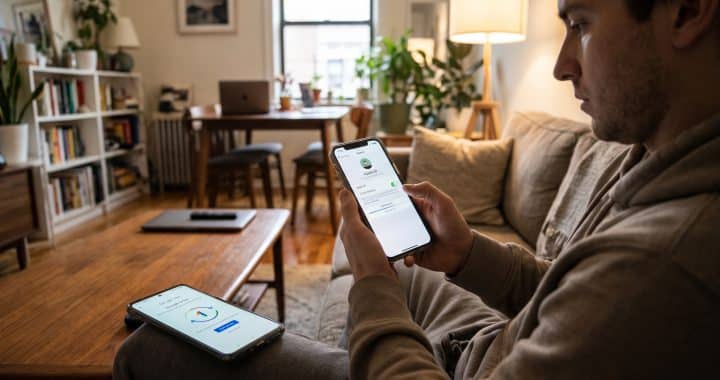

A woman I’ll call Maya sat across from me last spring and told me, almost proudly, that her kitchen had never been cleaner. She had a grant proposal due in nine days and had not written a single word of it. What she had done was reorganize her spice rack, alphabetize her pantry, and descale a kettle she admitted she rarely used. If you have ever searched for how to stop procrastinating while your real work sat untouched, you will probably recognize her. (Maya is a composite of several clients with details changed, but I have heard the spice rack story more times than I can count.)
“I’m not lazy,” she said. “I just can’t make myself start.”
She was right on both counts. That sentence is the doorway to almost everything I know about how to stop procrastinating. After years of practicing cognitive behavioral therapy, I no longer think of procrastination as a scheduling problem. Instead, I think of it as a feelings problem that happens to show up on a calendar.
This piece is what I would tell you if you sat in my office for a few sessions. It is not a list of hacks. Rather, it is the working model I use with clients, the research behind it, and the specific techniques that tend to move people from staring at the task to actually being inside it.
Why Learning How to Stop Procrastinating Starts With Your Mood
Most people arrive in my office having already tried the planners, the apps, and the color-coded calendars. Some of those tools are fine. But if planning were the cure, my waiting room would be empty.
The research tells a consistent story. Fuschia Sirois and Timothy Pychyl have argued that procrastination, as a kind of self-regulation failure, is largely about short-term mood repair, and that the consequences usually land on our future self. Pychyl puts it even more plainly: in his view, procrastination is a misregulation of emotion, driven by the belief that putting something off will make us feel better. It is not really a time management problem at all.
When I first read that framing, it matched exactly what I was seeing clinically. People don’t avoid tasks. They avoid how tasks make them feel. Pychyl describes avoidance as the coping mechanism, a way of sidestepping emotions attached to a task such as anxiety, boredom, frustration, or resentment. Avoid the task and you avoid the feeling, at least for the next twenty minutes. Any honest advice on how to stop procrastinating has to begin right there.
This is also why Charlotte Lieberman’s New York Times piece landed with so many readers. She opened with the image of someone alphabetizing a spice drawer to dodge an important task. As she pointed out, that takes real focus and effort, so it is not laziness or poor time management. It is procrastination.
How Common Chronic Procrastination Really Is
The scale of this is not small. Joseph Ferrari at DePaul University, one of the pioneers of modern procrastination research, has found that as many as 20 percent of people may be chronic procrastinators. That is not a quirky personality trait. It is a pattern that quietly shapes careers, health, and relationships. Sirois has even found links between procrastination and coronary heart disease and hypertension, along with indirect effects like putting off exercise, diet changes, and medical treatment.
There is one more finding I share with clients because it relieves a lot of unnecessary guilt. Piers Steel’s review concluded that perfectionism is not the culprit many self-help books claim. In fact, perfectionists procrastinate less, though they worry about it more. The strong and consistent predictors were task aversiveness, low self-efficacy, impulsiveness, and aspects of conscientiousness such as self-control and distractibility. In other words, the problem is rarely that you care too much. It is usually that the task feels bad and you don’t fully trust yourself with it.
The Thoughts That Make It Hard to Stop Procrastinating
CBT rests on a simple idea. Situations don’t directly create our feelings; our interpretations of those situations do. So when a client tells me they “just couldn’t start,” I get curious about the sentence that ran through their head right before they reached for their phone.
A handful of thoughts show up again and again. If you want to know how to stop procrastinating, these thoughts are the first place I would look. You may recognize yourself in one of them.
“I need to feel ready first.”
This is the most common and the sneakiest. It assumes motivation must come before action. In my experience, it is usually the reverse. Readiness tends to arrive about ten minutes after you start, not before.
“If I can’t do it well, there’s no point.”
This is all-or-nothing thinking. The task is either a masterpiece or a disaster, with no middle ground. Because the first draft has to be the final draft, the first draft never happens.
“This is going to be awful.”
This is fortune telling. You predict the task will be unbearable, and because you never test that prediction, it never gets corrected. Psychologists call part of this affective forecasting: simply anticipating a bad feeling becomes reason enough to wait.
“I’ll have more energy tomorrow.”
I gently remind clients that tomorrow’s version of them has the same nervous system as today’s. Pychyl notes that procrastination is powerfully rewarding in the short term, so the present self benefits while the future self pays. We keep imagining that future self as calmer and more capable. They rarely are. (That said, if you genuinely are running on empty, learning how to fall asleep fast may do more for tomorrow’s focus than any promise you make tonight.)
“I work better under pressure.”
Ferrari’s experiments suggest otherwise. When people were asked to work as quickly as possible, those who identified as procrastinators made more mistakes than non-procrastinators. The deadline doesn’t improve the work. It simply overrides the fear long enough to get something out the door.
I don’t argue clients out of these thoughts. Instead, I ask them to write the thought down, rate how strongly they believe it, and look at the evidence on both sides. Getting the thought onto paper often loosens its grip more than any pep talk could.
The Avoidance Loop: Why It Is So Hard to Stop Procrastinating
Early in treatment, I usually sketch the same simple diagram for clients: five boxes, connected by arrows.
- The trigger: you open the document, see the email, or remember the task.
- The feeling: a flicker of dread, boredom, or self-doubt.
- The escape: you check the news, tidy the desk, or answer an easy message.
- The relief: the dread drops, and for a moment you feel better.
- The lesson: your brain quietly files away that avoiding works.
Why Relief Keeps the Loop Going
That fourth box is the trap. Sirois has pointed out that we are effectively rewarded for procrastinating, and basic behaviorism tells us rewarded behavior gets repeated. That is why procrastination tends to become a cycle rather than a one-time event.
Then comes the part nobody talks about: shame. Once the relief fades, you feel worse about the task than before, and worse about yourself for dodging it. That extra bad feeling makes the task even more unpleasant next time, so the loop tightens. Rozental and Carlbring note that procrastination is often reinforced by an unwillingness to experience discomfort, which is why treatment usually involves some form of graded exposure.
When clients see the loop drawn out, many of them visibly exhale. Not because the drawing is clever, but because it reframes the problem. They are not broken. They have simply learned, very efficiently, that avoidance reduces pain in the short run. Learning how to stop procrastinating is largely about teaching the brain a different lesson.
How to Stop Procrastinating: The Methods I Use With Clients
Here is the encouraging part. A meta-analysis led by Alexander Rozental concluded that psychological treatments generally have small benefits for procrastination, with a lot of variation between studies. However, when the researchers looked only at studies using cognitive behavior therapy, the effect size rose to 0.55 and the variation between studies disappeared. That consistency is what convinces me these tools are worth your time if you are serious about how to stop procrastinating.
The CBT approach tested in that line of research drew on techniques such as behavioral activation, behavioral experiments, stimulus control, and education about motivation and work methods. Below is how I translate those ingredients into what I actually do with clients, week by week.
1. Name the Feeling Before You Reach for a Fix
When you notice the pull to avoid, pause for thirty seconds and finish this sentence: “When I think about this task, I feel…” Be specific. Bored is different from anxious. Resentful is different from overwhelmed. Each one points to a different solution.
Boredom calls for stimulation: music, a timer, or a change of scenery. Anxiety about being judged calls for lower stakes, such as a private draft no one else will see. And when the feeling is resentment (“why is this even my job?”), the task may need a conversation with someone rather than more willpower.
Naming the feeling also does something quieter. It turns a vague, swamping dread into a single labeled emotion you can look at directly. Clients regularly tell me this step alone shrinks the urge to escape. If the feeling underneath is a broader sense of overload, these strategies on how to reduce stress pair well with this step.
2. Shrink the First Step Until It Is Almost Embarrassing
“Write the proposal” is not a task. It is a project with a dozen tasks hiding inside it. Your brain looks at the whole thing, registers threat, and steers you toward the spice rack.
So I ask clients to define the first physical action, small enough that it feels slightly silly. Open the file. Type the title. Write one ugly sentence about who the proposal is for. Pychyl’s own go-to strategy, once you have noticed what you are feeling, is simple: just get started. Not finish. Start.
With Maya, our agreement was ten minutes of writing, after which she was allowed to stop with zero guilt. She wrote for forty. That pattern is so common I almost expect it now. The hard part was never the work. It was the doorway into the work.
3. Write an If-Then Plan
This is one of the best-supported tools in all of behavior change research. Instead of a vague goal (“I’ll work on the report this week”), you link a specific situation to a specific action: “If it is 9 a.m. on Tuesday and I’ve poured my coffee, then I open the report and write for fifteen minutes.”
In Peter Gollwitzer and Paschal Sheeran’s analysis of 94 independent tests, these plans had a medium-to-large effect on goal attainment, and they were especially effective at helping people get started. A later review by Sheeran and colleagues covering 642 tests reinforced the value of this kind of planning for regulating thoughts, feelings, and actions.
Why does it work? Because the decision has already been made. When 9 a.m. arrives, you are not negotiating with yourself; you are following through on something your calmer self already settled. I also have clients write a second plan for the exact moment they want to bail: “If I feel the urge to check my phone, then I write one more sentence first.”
4. Test Your Prediction Instead of Obeying It
This is my favorite CBT technique for procrastination, because it turns the whole thing into an experiment rather than a test of character.
Before starting, write down your prediction: “This will be miserable, I’ll get nothing useful done, and I’ll feel worse.” Rate how strongly you believe it from 0 to 100. Then do the task for a set time, say twenty minutes. Afterward, write down what actually happened and rate the original prediction again.
Nearly every client I have worked with discovers the same thing: the anticipation was worse than the experience. Not always pleasant, but rarely as bad as predicted. Repeat this a handful of times and the brain begins to update. Gradually, the fortune teller in your head loses credibility.
5. Change the Room, Not Your Character
Clients often tell me they need more discipline. I usually tell them they need fewer temptations within arm’s reach. That is stimulus control, and it is far more reliable than trying to become a different person.
Put the phone in another room. Close every browser tab unrelated to the task. Work in a spot you associate with focus rather than scrolling. Pychyl argues that multitasking with technology is extremely difficult, and that simply putting the device down is the best way to reduce the temptation.
I also encourage clients to build start cues: the same chair, the same playlist, the same mug. Over time, the cue itself begins to carry some of the weight of getting going.
6. Forgive Yesterday’s Delay So You Can Stop Procrastinating Today
This one surprises people. Many of my clients believe that being hard on themselves is what keeps them in line. The evidence points the other way.
In a study by Michael Wohl and colleagues, first-year students who forgave themselves for procrastinating before their first midterms felt less negative afterward and were less likely to procrastinate before the second round of exams. The effect worked by reducing negative feelings, and it showed up mainly among students who had procrastinated heavily the first time.
It is worth being honest about the limits. Every key measure was self-reported, and nobody was randomly assigned to practice forgiveness or self-criticism. Still, it fits what I see in the therapy room every week. When a task becomes soaked in guilt, people avoid it more. Self-forgiveness is not letting yourself off the hook. It is acknowledging the delay, accepting that it happened, and making the task approachable again.
In session, I sometimes ask clients to say it out loud: “I put this off. That makes sense, given how I was feeling. I’m starting now anyway.” It sounds small. It isn’t.
7. Let Action Go First and Let Motivation Catch Up
Behavioral activation came out of depression treatment, and its core idea transfers beautifully to procrastination. You don’t wait to feel motivated before acting. You act, and motivation follows.
So I ask clients to schedule the task like an appointment rather than a wish: a block on the calendar, a defined first step, and a clear stopping point. When the block arrives, you show up regardless of mood. Some days you will get a lot done. Other days you will write three sentences. Both count, because the real goal is teaching your brain that starting is survivable. The same principle works for any recurring chore you keep dodging, from paperwork to a weekly meal prep session.
When Tips on How to Stop Procrastinating Are Not Enough
Most procrastination responds well to the tools above. But I want to be careful here, because sometimes chronic delay is a symptom rather than the main problem.
Ferrari has said that telling a chronic procrastinator to just do it is like telling a clinically depressed person to cheer up. I agree. If your procrastination comes alongside persistent low mood, loss of interest, constant worry, difficulty concentrating in every area of life, or long-standing trouble with attention and organization, please talk to a professional. Depression, anxiety, and ADHD can all look like procrastination from the outside, and each deserves its own proper assessment.
Rozental and Carlbring estimated that roughly half of students and 15 to 20 percent of adults have substantial difficulties due to chronic procrastination. If you are one of them, you are in very large company, and you deserve real support rather than another productivity app.
A Short Script for How to Stop Procrastinating in the Moment
When clients finish working with me, I give them something they can use in the moment. Here is a version of it:
- Notice: “I’m avoiding something right now.”
- Name: “The feeling is ____.”
- Normalize: “Of course I want to escape that feeling. That’s what brains do.”
- Narrow: “The smallest next step is ____.”
- Do: “I’ll do that one step for ten minutes, and then I’m allowed to stop.”
That’s it. Five lines. In the end, learning how to stop procrastinating is not about becoming a fundamentally more disciplined person. It is about getting slightly better, one attempt at a time, at tolerating a few minutes of discomfort so you can walk through the door.
Maya submitted her proposal two days early. Her kitchen, she told me, was a mess.
Frequently Asked Questions
Why do I procrastinate even on tasks I care about?
Because caring raises the emotional stakes. The more a task matters, the more room there is for anxiety, self-doubt, and fear of judgment, and those are exactly the feelings avoidance temporarily relieves. Timothy Pychyl explains this emotion-first view in this Carleton University interview on the procrastination problem.
Is procrastination the same as laziness?
No. Lazy people rarely feel distress about not doing things, while procrastinators usually feel a great deal of it. Charlotte Lieberman’s New York Times article on why we procrastinate draws this distinction clearly.
Does CBT actually help people stop procrastinating?
The evidence is encouraging. A systematic review and meta-analysis in Frontiers in Psychology found that CBT-based treatments produced the most consistent results among psychological interventions for procrastination.
What is the fastest way to stop procrastinating and start a task?
Pick the smallest physical first step, set a timer for ten minutes, and give yourself permission to stop when it rings. Pairing that with an if-then plan, as described in Gollwitzer and Sheeran’s research on implementation intentions, makes follow-through far more likely.
Should I be hard on myself so I don’t procrastinate again?
Research suggests the opposite. The British Psychological Society’s summary of the self-forgiveness study describes how students who forgave themselves procrastinated less the next time around.
How do I know if my procrastination is chronic?
If delay shows up at home, at work, at school, and in your relationships, and has for a long time, it may be chronic. The American Psychological Association’s interview with Joseph Ferrari explains what separates everyday delay from chronic procrastination.
References
- Sirois, F., & Pychyl, T. (2013). Procrastination and the Priority of Short-Term Mood Regulation: Consequences for Future Self. Social and Personality Psychology Compass, 7(2), 115–127.
- Steel, P. (2007). The Nature of Procrastination: A Meta-Analytic and Theoretical Review of Quintessential Self-Regulatory Failure. Psychological Bulletin, 133(1), 65–94.
- Gollwitzer, P. M., & Sheeran, P. (2006). Implementation Intentions and Goal Achievement: A Meta-Analysis of Effects and Processes. Advances in Experimental Social Psychology, 38, 69–119.
- Sheeran, P., Listrom, O., & Gollwitzer, P. M. (2025). The When and How of Planning: Meta-Analysis of the Scope and Components of Implementation Intentions in 642 Tests. European Review of Social Psychology, 36(1), 162–194.
- Wohl, M., Pychyl, T., & Bennett, S. (2010). I Forgive Myself, Now I Can Study: How Self-Forgiveness for Procrastinating Can Reduce Future Procrastination. Personality and Individual Differences, 48(7), 803–808. Summary via the British Psychological Society Research Digest.
- Pychyl, T. A. (2009). Self-Forgiveness Reduces Procrastination. Psychology Today.
- Rozental, A., Bennett, S., Forsström, D., Ebert, D. D., Shafran, R., Andersson, G., & Carlbring, P. (2018). Targeting Procrastination Using Psychological Treatments: A Systematic Review and Meta-Analysis. Frontiers in Psychology, 9, 1588.
- Rozental, A., & Carlbring, P. (2013). Internet-Based Cognitive Behavior Therapy for Procrastination: Study Protocol for a Randomized Controlled Trial. JMIR Research Protocols, 2(2), e46.
- American Psychological Association. (2010). Psychology of Procrastination: Why People Put Off Important Tasks Until the Last Minute. Interview with Joseph Ferrari, PhD.
- Association for Psychological Science. Why Wait? The Science Behind Procrastination. APS Observer.
- Lieberman, C. (2019). Why You Procrastinate (It Has Nothing to Do With Self-Control). The New York Times.
- Coppella, L. Procrastination Problem? Tim Pychyl Knows Why. Carleton University Newsroom.
- Fox News. Why Your Procrastination Excuses Don’t Cut It. Interview with Joseph Ferrari.